
Rethinking politics in the digital Age: Interviw with Prof. Dr. Estariol de la Paz
This interview was initially published on the Hasso Plattner Institute website on Aprli 21, 2026.
Prof. Dr. Estariol de la Paz grew up in London, surrounded by people from diverse backgrounds. This environment shaped their curiosity about global politics, cultures, and the ways people understand the world around them.
Before entering academia, they worked as a photojournalist. "I was working in journalism during the financial crash in the US in 2007–2008, when the industry was completely gutted. Technology and the internet had already changed things so much that the profession I used to work in was no longer there."
That fueled their interest in interaction between politics and technology that they brought into academic career. Right before starting their PhD in Oxford, they were studying in Shanghai.
"Being there got me thinking more about politics and technology, censorship, and different forms of governmental control over information, and how that worked on a much more specific level. But it also gave me the chance to try to learn another country's rules to understand it better, and it gave me a reason to question all of these things in my own culture."
Today, at the Hasso Plattner Institute, Prof. de la Paz researches how digital technologies — from algorithms to artificial intelligence — are reshaping political systems and power structures worldwide.
Hasso Plattner Institute (HPI): You have been working for HPI for more than two years. How would you summarize your work so far?
Prof. Dr. Estariol de la Paz: One of our biggest achievements was a series of reports that we launched in February 2025. The Path to Power project studied 10 different elections that happened across some of the most populous countries in the world as well as some other key and representative country elections., e.g. India, the USA, Indonesia, Pakistan, Georgia and Mexico.
Then we used those reports, which were more of a general overview intended for policymakers or people who were interested in those countries, to generate our three main research projects, one for each of the group's three postdocs.
One of these focused on digital citizenship and how we teach people about using the internet. One of them focused on the use of AI in elections. And the third one was focusing on how populist leaders legislate and change digital technology freedoms and regulations after they come into power.
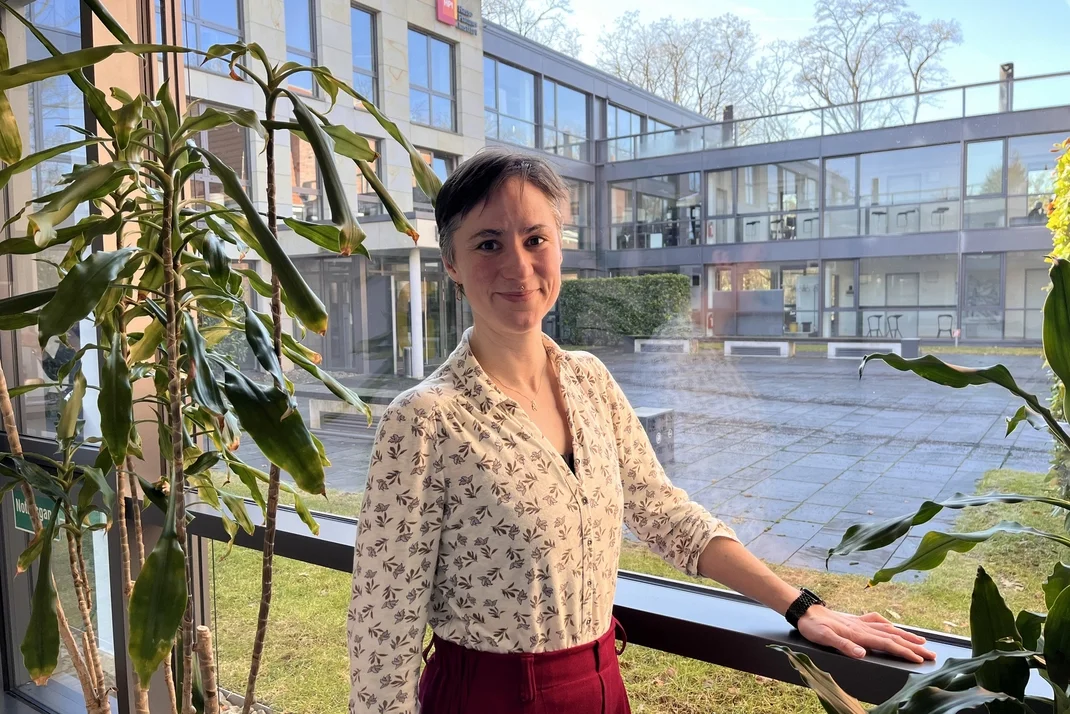
Prof. Dr. Estariol de la Paz
Photo: Natasha Kondrashova
HPI: And what is the second part of the Path to Power project going to be about?
Prof. Dr. de la Paz: We wanted to build on our existing research that studies what is happening to shift to a greater focus on our options to do something about what we see happening e.g. how we might actually envisage our political system to be different around the affordances and opportunities that new technologies give us - try to do something more solution orientated.
One of the ideas around this is looking more into open-source code and transparency, because right now we have no idea how TikTok or any other service’s algorithm puts together its recommendations that may manipulate your attention.
If we could see exactly how these algorithms worked, then companies would have much more oversight and would not be able to skirt around the meaning of regulations or do the minimum because people would be checking it.
And when we're talking about the alternative solutions to the problems that have arisen around technology, governance and politics, one of the main things is looking at ideas that are coming from non-Western contexts, either historically or currently. These things are often forgotten, but there are many interesting innovations, for instance around contestation against big technology companies and exploitative research extraction. These things happening in the Global South that are sometimes looked at as quaint little case studies, and very few people look at them as something that could teach us in the West.
HPI: What are the main challenges for researchers studying digital technologies and their interactions with politics?
Prof. Dr. de la Paz: We can almost never really understand how an algorithm works. Technology companies can do A/B testing, trying out a new format for some users. Even if you try your best to replicate a hundred different users and control them all in your study, that still doesn't help you very much to get an understanding of how these algorithms might work.
When you don’t have access to the backend, it’s very difficult to talk about causation and the totality of what people might see.
And even for someone who is not using the internet at all, their lives are still profoundly affected by the digital sphere now. This is a real challenge, and this is partly why I want to focus on context in the second part of this project, because there is always criticism when you do research focusing on platforms about how you are limited by the availability of data, personalization and hugely different contexts of use across similar technologies.
HPI: What is the main big thing everyone is going to talk about in the near future that is still largely unknown to the public yet?
Prof. Dr. de la Paz: People in my very specific research area at the intersection of technology, politics, economics and power are often talking about capitalism being over. People still talk about and think about capitalism, but a lot of academics working in this area see that neoliberal capitalism and in some ways the time of these powerful nation-states is past.
For instance, Shoshana Zuboff states that surveillance capitalism has replaced neoliberal capitalism. Yanis Varoufakis is talking about techno-feudalism. Vili Lehdonvirta is writing about cloud empires. All people are using these different metaphors to describe what's going on, because when you have a completely new economic and political system, it's very hard to describe it. And we think that this has yet to catch up with much wider academia.
The conversation with Prof. Dr. Estariol de la Paz highlights how deeply digital technologies are embedded in political systems and how difficult it remains to fully understand their impact.
At the same time, the interview points toward possible ways forward: greater transparency, new regulatory approaches, and a broader, more global perspective on governance in the digital age.