
Bringing Automated Political Stance Identifier to Practitioners
On May 19, 2026, the Path to Power project hosted an event "How to Automatically Detect Political Stance in Text," marking the launch of the Automated Political Stance Identification (APSI) Tool at the Hasso Plattner Institute. The event brought together civil society experts and policymakers to introduce them to the tool and demonstrate the range of cases it can be applied to.
APSI is an AI-driven tool that automatically scores texts on three political dimensions: economic ideology, populist rhetoric, and support for liberal democratic values.
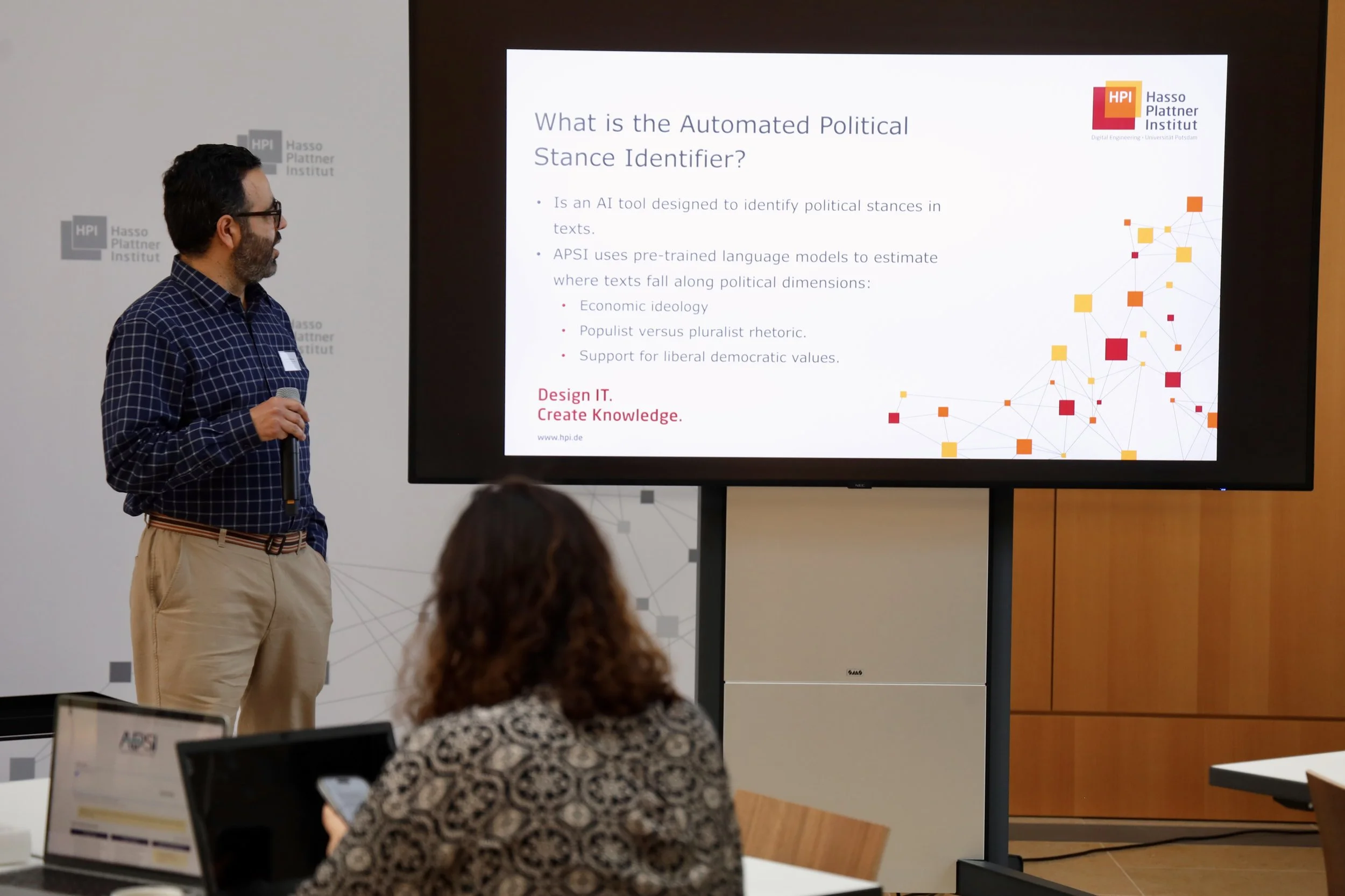

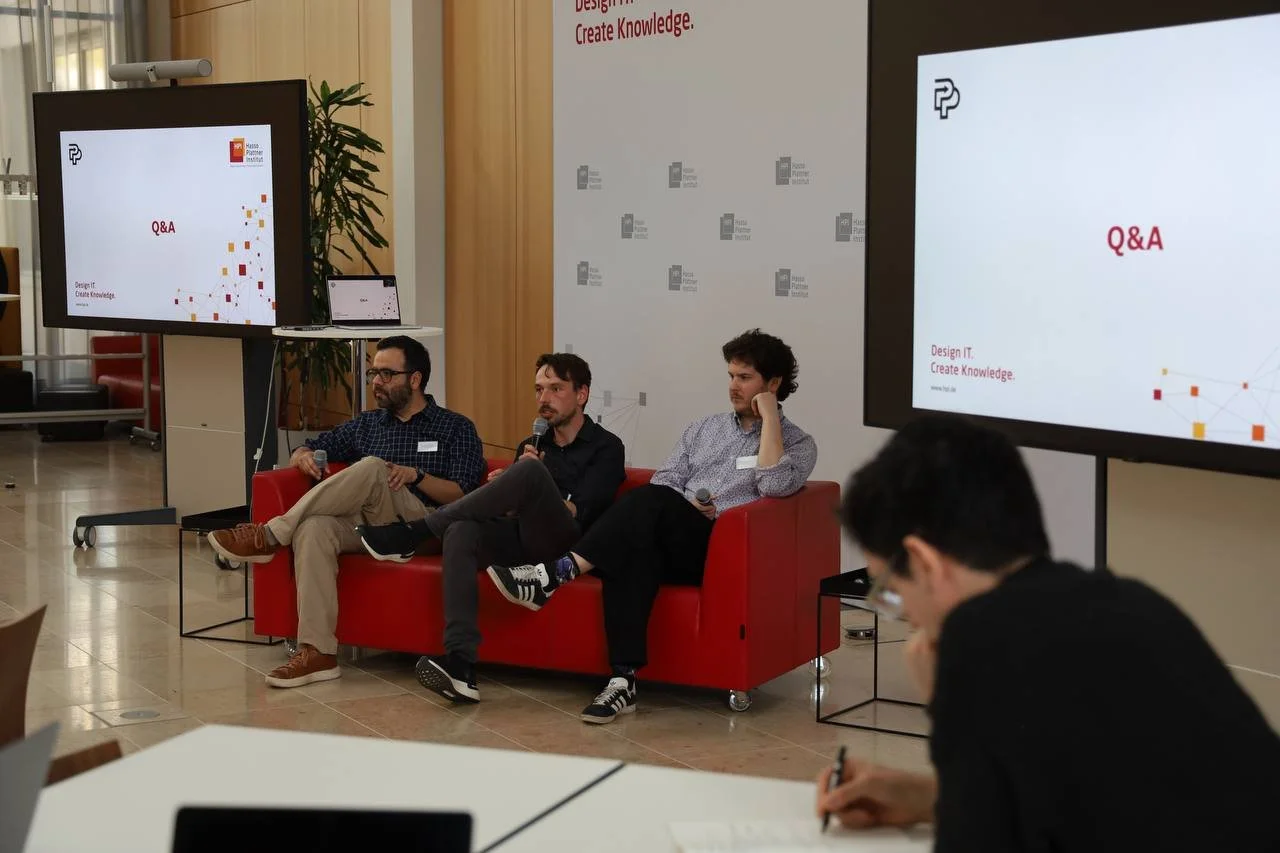
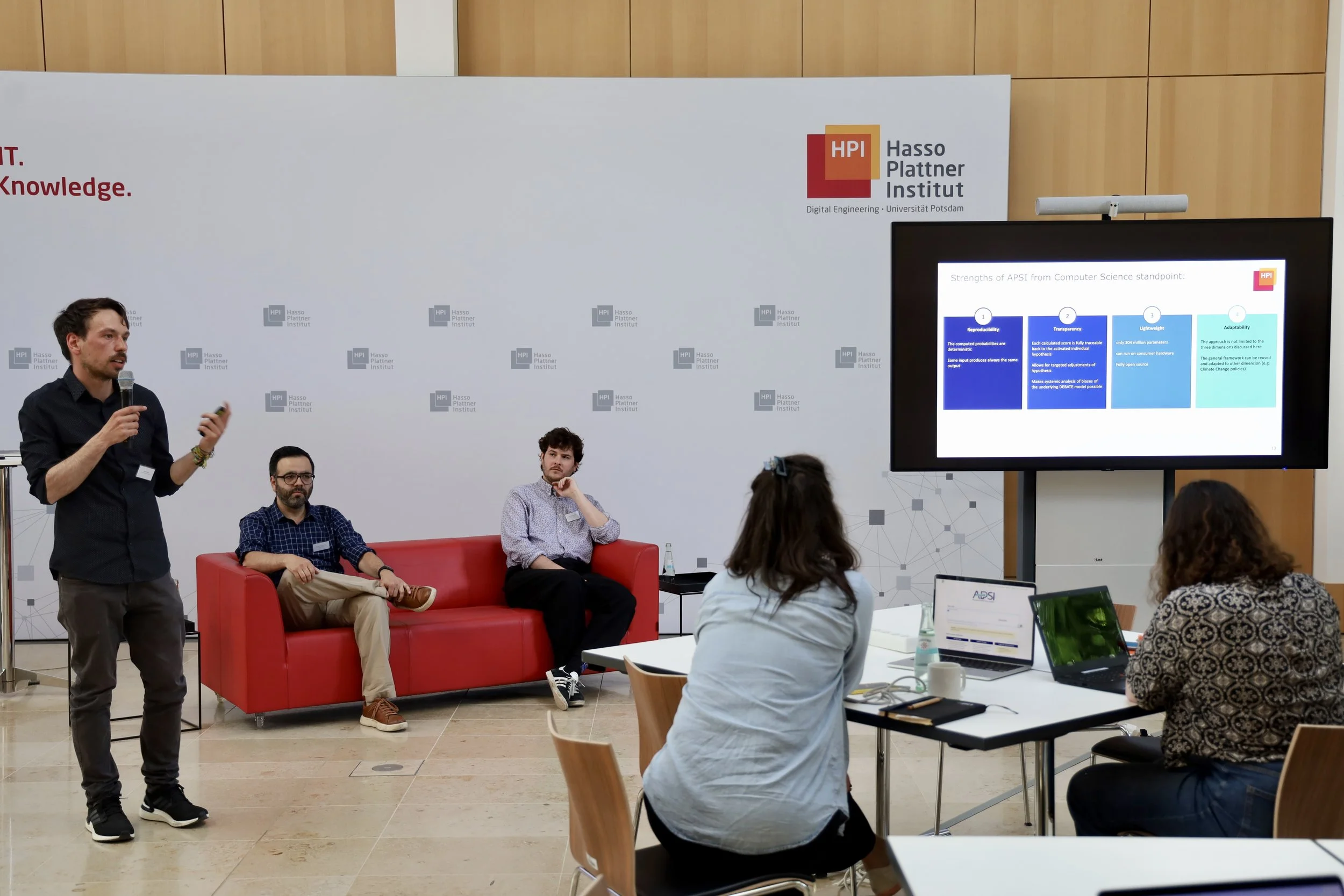
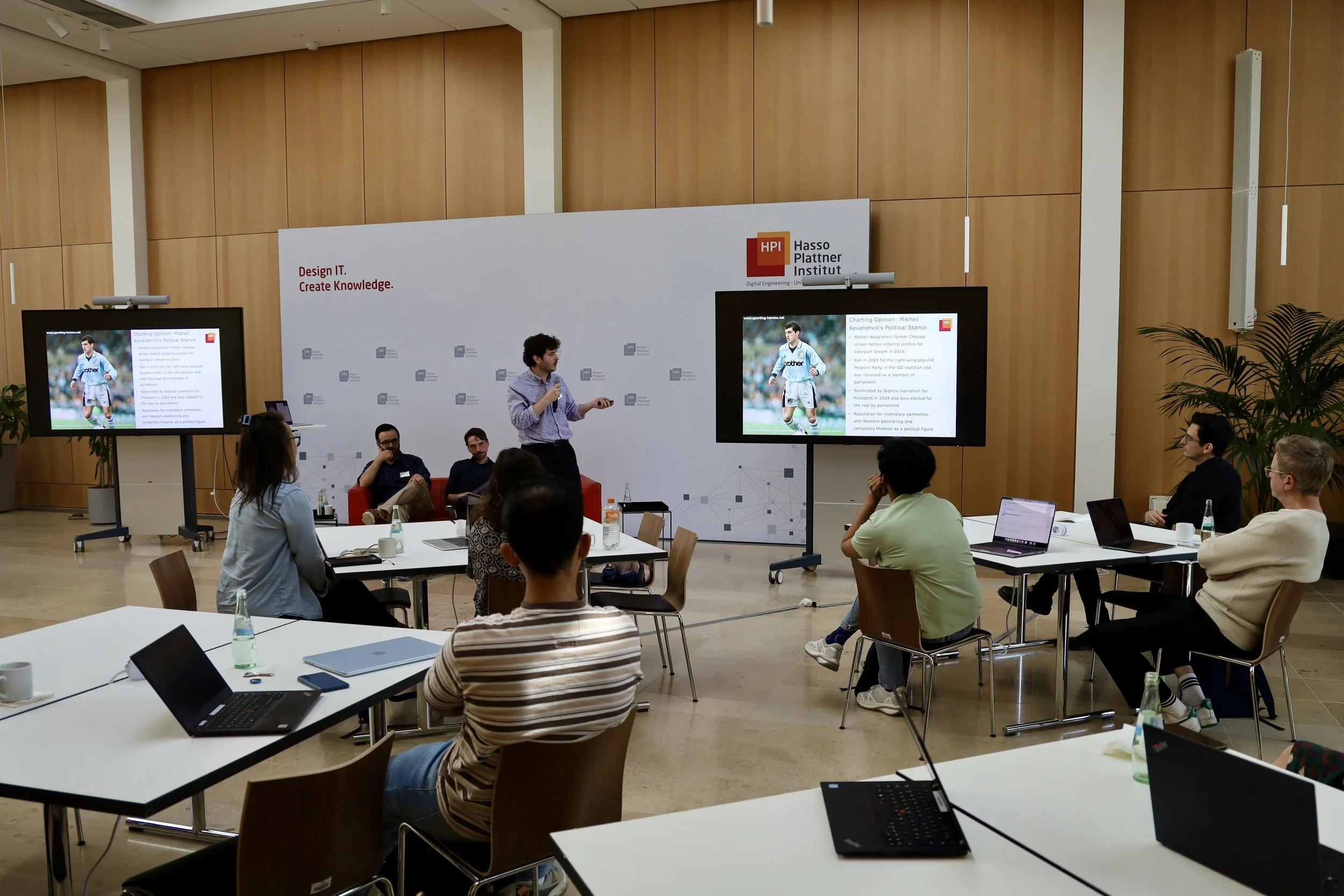
The researchers presented the tool, shared how it works from a technical perspective and demonstrated its practical implementation. In particular, they showed, using Georgia as a case study, how APSI can be used for media narratives monitoring and identifying rhetorical shifts in political discourse over time. The researchers also explained what makes the APSI tool more reliable for political text analysis than conventional AI programs and what limitations it has.
In response to a question about what corpus of texts is preferable for analysis, Dr. Juan S. Gómez Cruces highlighted that "parties' manifestos, political statements, politicians' speeches, media reports, training data sets" can be used. Gómez Cruces mentioned that APSI is not a commercial model and could be used for educational purposes as well, teaching students how to detect political stances in texts and therefore contributing to the wider dissemination of political knowledge.
The participants had a chance to test the tool in real time. They were given demo texts from party manifestos and leader statements across six leading political parties in the US and Germany. The researchers also presented a new option: users can upload documents for analysis and provide their email address to be notified automatically when the results are ready.




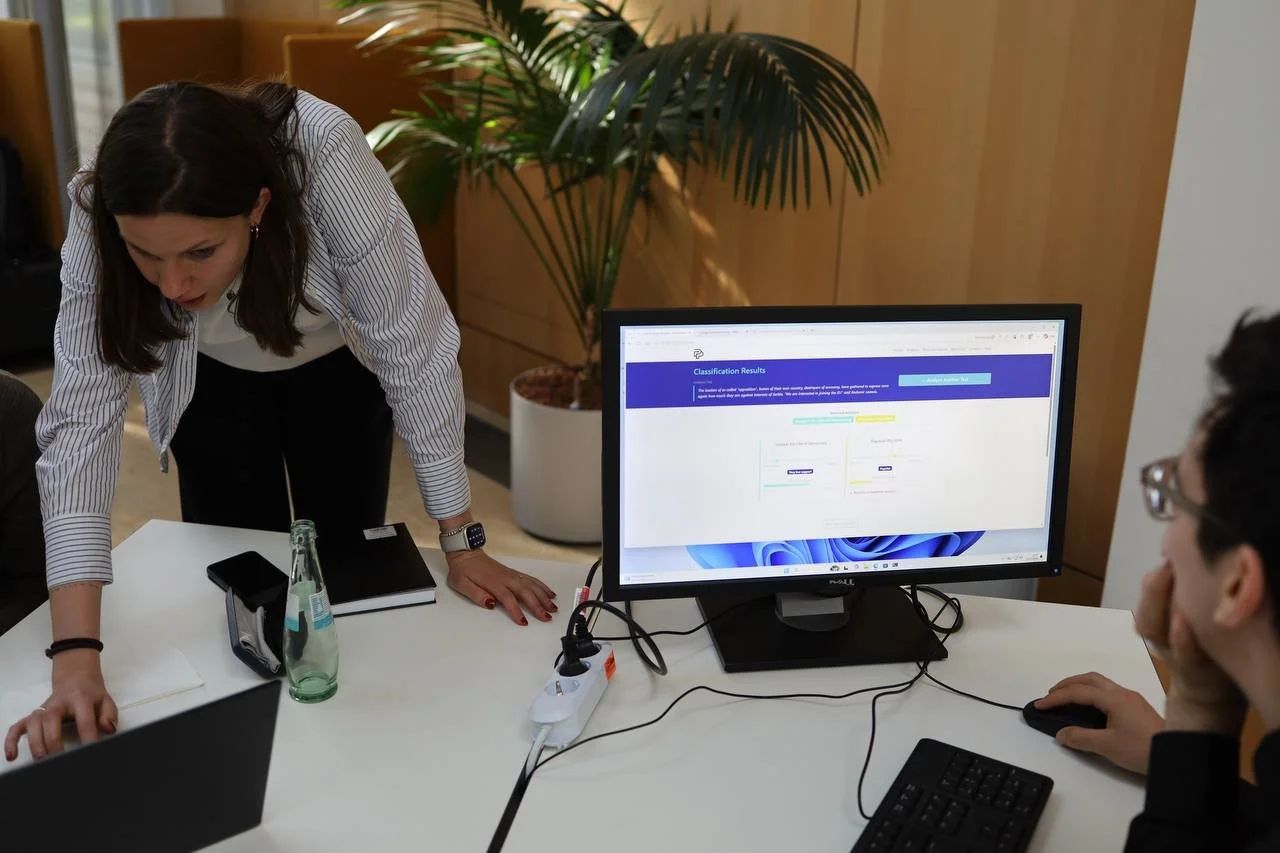
More than 20 people attended this practice-oriented event, including representatives from GIZ, Democracy Reporting International, Civil Society Forum, Berlin Institute of Technology, Heinrich Böll Stiftung, and Politik Digital.